


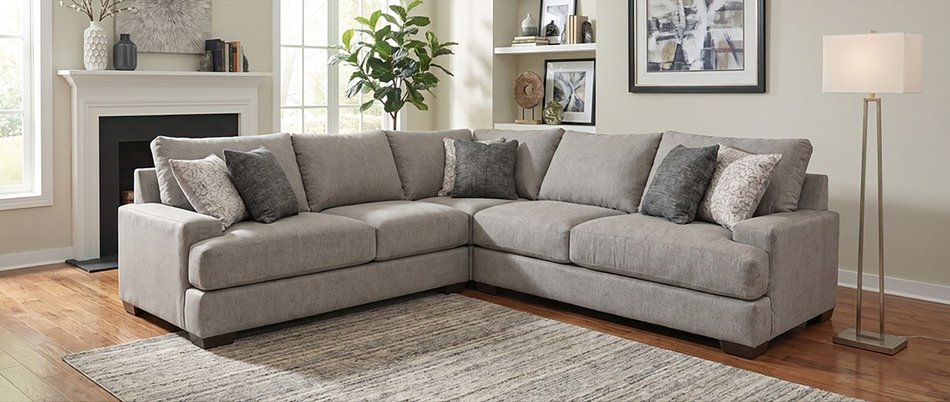
Finding the right sectional isn’t just about picking a comfy corner to binge-watch your favorite show. The sectional you choose becomes the anchor of your living room. It affects walking space, how your other furniture fits, the distance to your TV, and even how your home flows from room to room.
Here’s a detailed guide to help you choose the perfect sectional for your living room, with practical layout measurements and design tips, plus how Cardi’s Furniture & Mattresses can help you pull everything together locally.
1. Start with your room: measure, then measure again
Before you fall in love with an oversized U-shaped sectional, grab a tape measure and a quick sketch of your living room.
Key clearances to keep in mind
Interior designers consistently recommend:
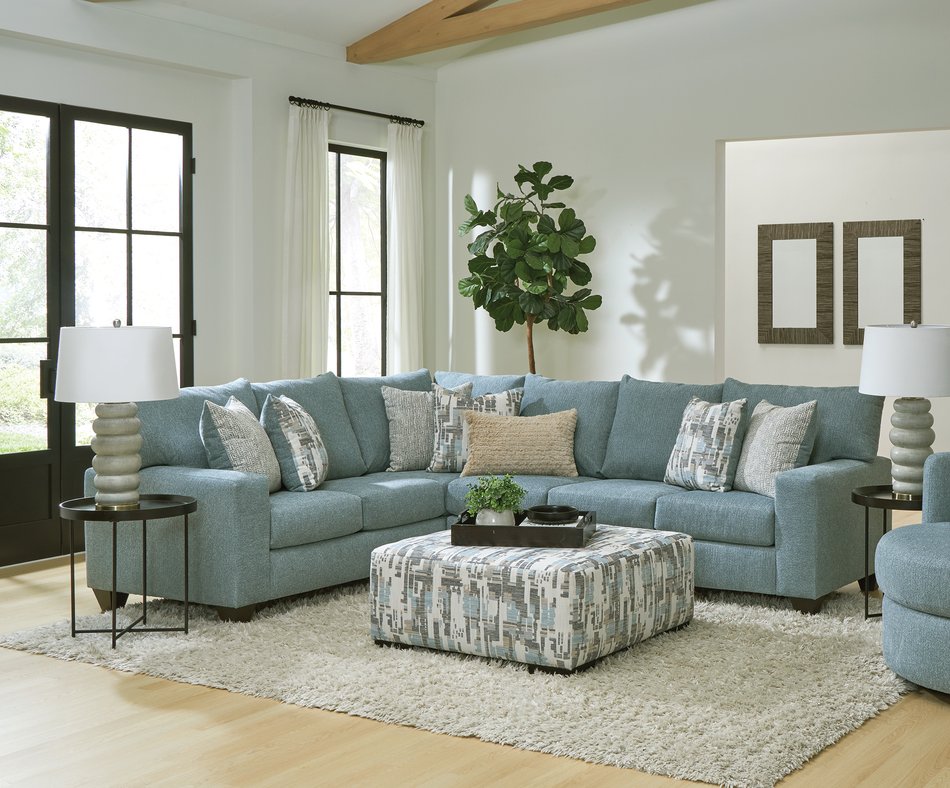
Main walkways: Aim for about 3 feet (36″) of walking space in primary traffic paths so people can move comfortably without turning sideways.
Around the cocktail table/ottoman: Leave 14″–18″ between the front edge of your sectional and a cocktail table or ottoman. That’s close enough to set down a drink without stretching, but far enough to walk through.
Low-traffic zones (like between the back of the sectional and a wall): You can go a little tighter, around 18″–24″ if it’s not a main pathway.
Use painter’s tape on the floor to outline different sectional sizes and shapes. This simple step lets you see if you’ll still have comfortable walking space once recliners are open, ottomans are in place, and people are actually using the room. Designers often do scaled drawings for this reason. It’s the best way to make sure every piece fits, and the room still functions.
At Cardi’s Furniture & Mattresses, associates can help you translate your measurements into sectional sizes and configurations, so the piece you love in the showroom fits your Seabrook colonial or Fall River triple-decker in real life.
2. Choose the right sectional shape for your space
Sectionals come in several main shapes, and each works best for certain room types and traffic patterns.
L-shaped sectionals
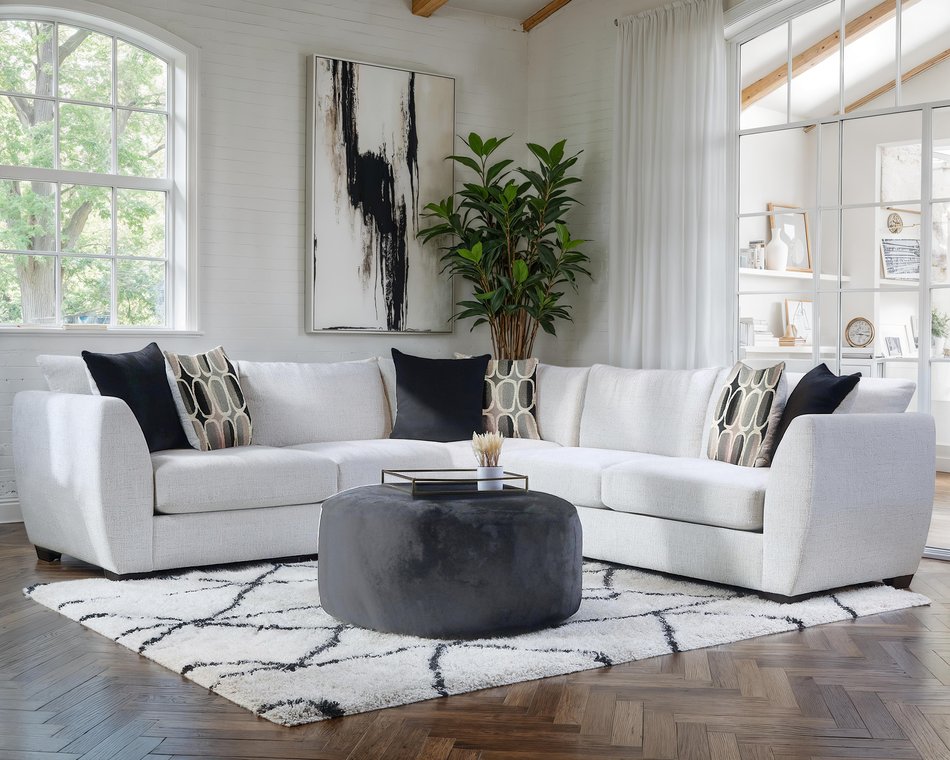
Best for: Corner placements, mid-sized living rooms, and spaces where you want one longer side and one shorter side.
Why they work: This is the most common sectional shape, offering a cozy corner while leaving plenty of open space for recliners, accent chairs, and traffic flow.
Pro tip: Pay attention to left-facing vs. right-facing (which side the longer piece or chaise extends when you face the sofa). You want the extended side away from major walkways, not blocking the path to your kitchen or hallway.
U-shaped sectionals
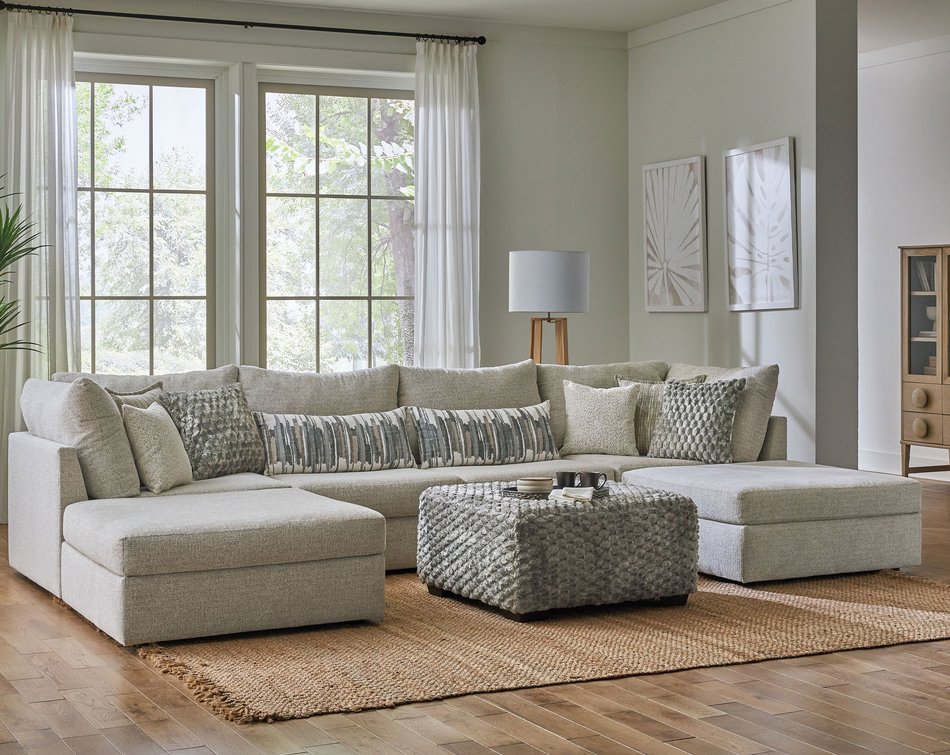
Best for: Larger rooms and open-concept homes in places where you’re hosting game days, movie nights, and big family gatherings.
Why they work: They create a “conversation pit” feeling with plenty of seating, wrapping around the cocktail table or ottoman.
Watch out for: U-shaped sectionals can dominate small living rooms and restrict walkways. Make sure you still have that 3-foot path to your entry and to other rooms.
Chaise + sofa sectionals
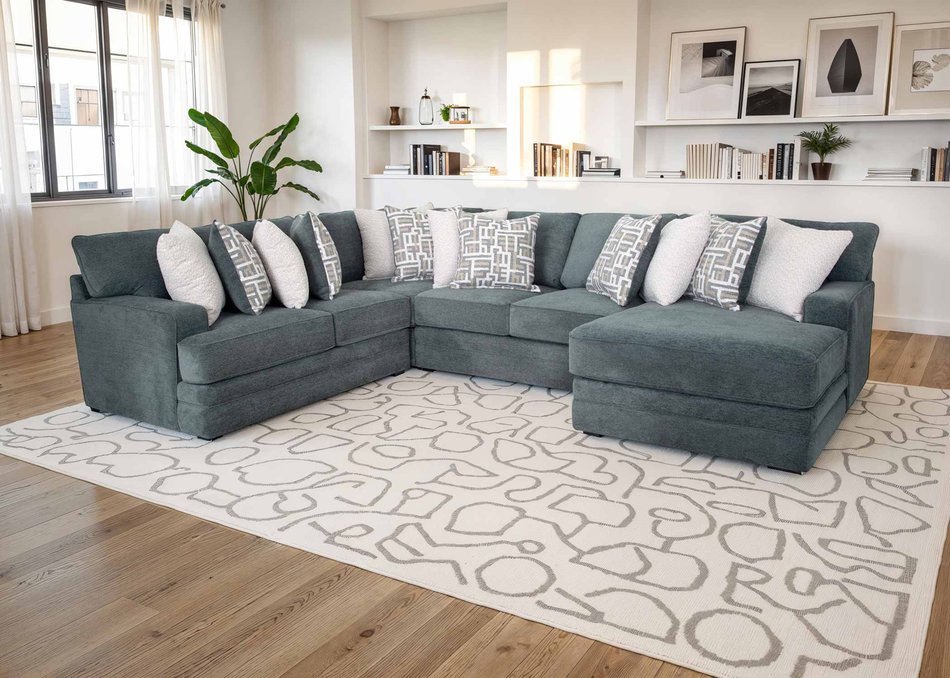
Best for: Narrow rooms or apartments in Providence, Boston suburbs, or downtown Worcester-style spaces where a full second “leg” might be too much.
Why they work: A chaise gives you lounge space without blocking the room the way a full L or U might.
Layout tip: Position the chaise so it faces toward your main focal point (usually the TV or fireplace) and doesn’t block sliding doors or the path from the front door to the kitchen.
Modular sectionals
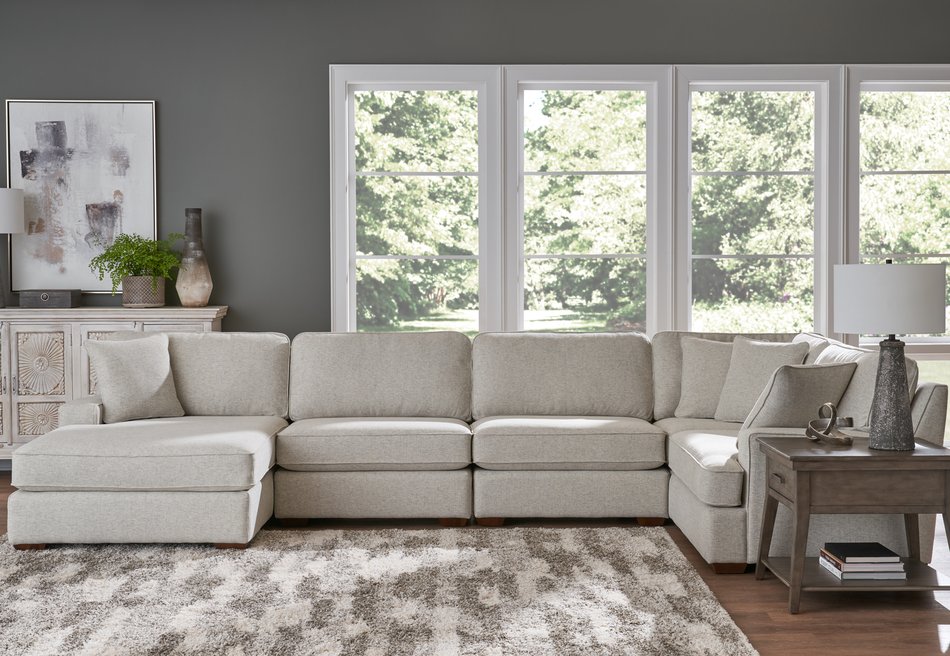
Best for: Households that like to rearrange or expect changes (growing family, roommates, pets, moving within Rhode Island, Massachusetts, New Hampshire, anywhere else in New England).
Why they work: Modular sectionals come in individual pieces that you can reconfigure from an L-shape to a more open layout.
Real-life bonus: If you move from, say, a townhouse to a larger Seabrook home, you can reconfigure the same sectional to fit the new space.
3. Get the TV distance and viewing angle right
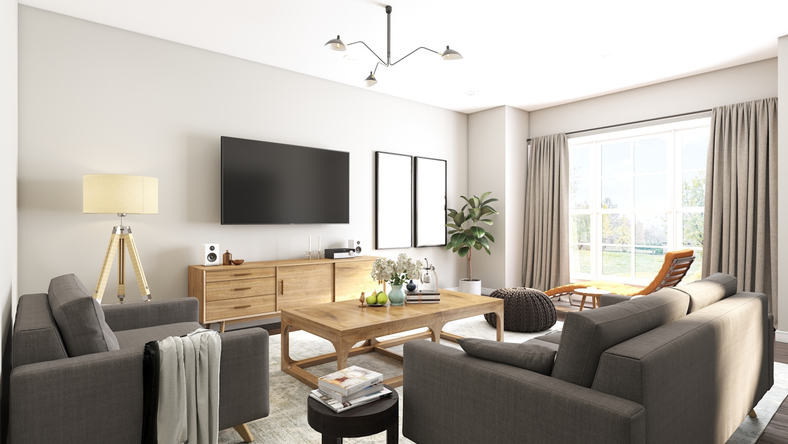
Your sectional and TV should work together. If you’re too close, the picture feels overwhelming; too far, and details get lost.
Many experts recommend sitting at about 1.5 to 2.5 times the TV’s diagonal measurement (in inches) away from the screen.
Approximate guideline:
- 50″ TV: 6–10 feet away
- 55″ TV: ~7–11 feet away
- 65″ TV: around 8–12 feet away
So if you’re shopping for a sectional in a Warwick family room with a 65″ TV, aim to place the front edge of the sectional about 8–11 feet from the TV screen. Use this range while you’re taping off where the sectional, TV stand, and media console will go.
Additional TV + sectional tips:
- Center the main seating (the longest side of your sectional) on the TV for the most comfortable viewing angle.
- Avoid layouts where people have to twist 90° to see the TV; that gets uncomfortable quickly, especially for older family members.
- If your space is open-concept, consider a swivel chair or a rotating recliner as an accent seat so people can turn toward the TV or toward the kitchen/conversation zone as needed.
4. Plan walking space and corners around the sectional
Sectionals are large pieces of furniture, so they can either help or hurt the flow of your living space.
Walking paths
- Keep 36″ walkways in key routes: entry door to sofa to hallway, and kitchen to living room.
- If your sectional backs onto a dining area in an open floor plan, leave enough room to pull out dining chairs without bumping into the sectional.
Corners and room edges
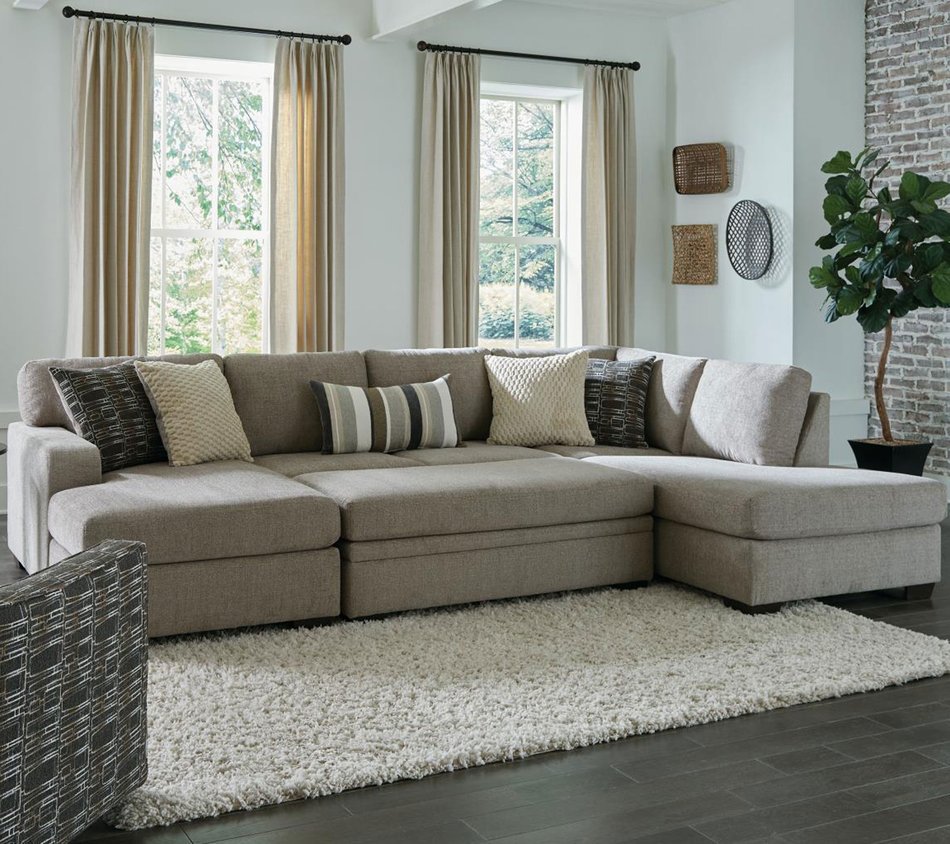
Don’t jam the sectional all the way into a corner just because it fits. Sometimes, “floating” the sectional a few inches from the wall lets you run a narrow sofa table behind it, add lighting, and create better visual balance.
In awkward corners, consider a corner shelf, floor lamp, or tall plant to soften the angle and avoid a “dead” dark space.
5. Integrate recliners, ottomans, and sofa tables
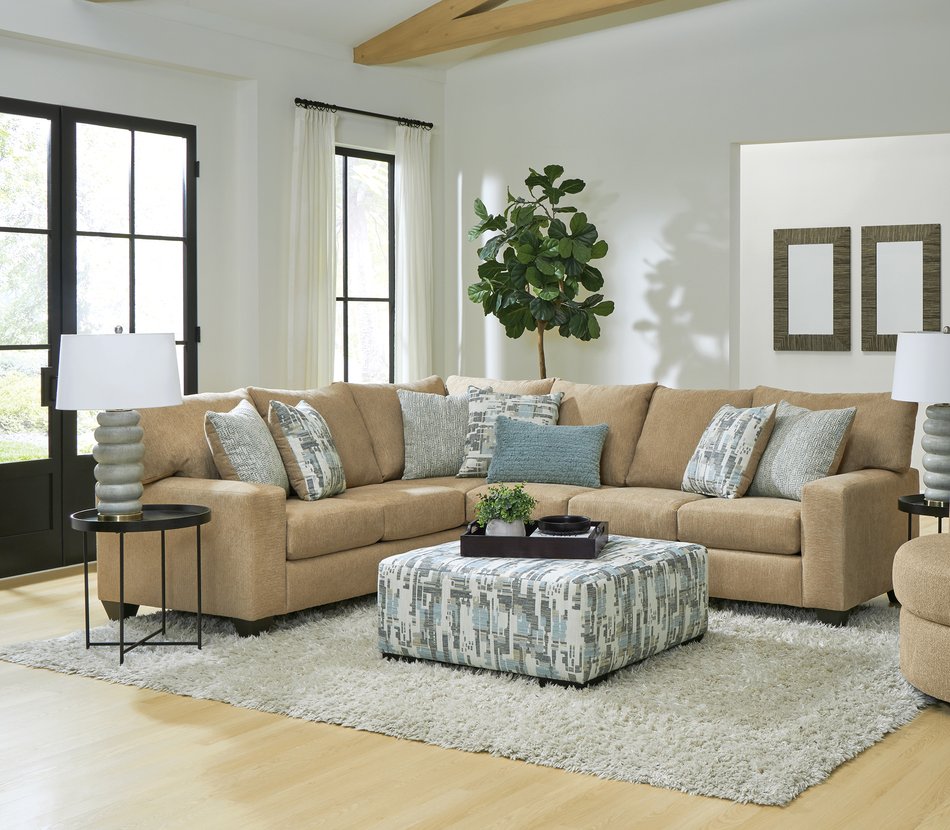
Your sectional is just one piece of the living room puzzle. The magic happens when your recliners, ottomans, sofa tables, and accent pieces all work together.
Recliners
Recliners need extra breathing space:
- Leave at least 12″–18″ between the back of a recliner and the wall when it’s upright.
- Make sure that when fully reclined, you still have a clear path past the sectional and recliner with no feet hanging into a main walkway.
- In tight rooms, consider wall-hugger recliners or reclining sectionals available at Cardi’s Furniture & Mattresses, which require less space behind them. (Ask in-store; many models are designed for smaller New England homes.)
Ottomans & coffee tables
- Keep that 14″–18″ distance between sectional and ottoman/coffee table.
- If walking paths are tight, a round or soft-edged ottoman can save shins and toes.
- Storage ottomans are perfect for stashing blankets during cold Rhode Island winters and toys in busy family homes.
Sofa tables (console tables)
A sofa table behind your sectional can:
- Create a visual transition between the living room and the dining/kitchen areas.
- Provide a spot for lamps, framed photos, and baskets for mail or devices.
- Help your sectional “float” in the room without feeling like a big block in the middle of the floor.
Just make sure you still have 24″–36″ behind the sofa table in any active walkway so people can pass comfortably.
Accent chairs and side tables
- Use one or two accent chairs to complete a “U” shape around your coffee table without needing an enormous U-shaped sectional.
- Place side tables so each main seat has a spot for a drink or book within arm’s reach, but don’t crowd them into walkways.
6. Color, fabric, and the tone of your room
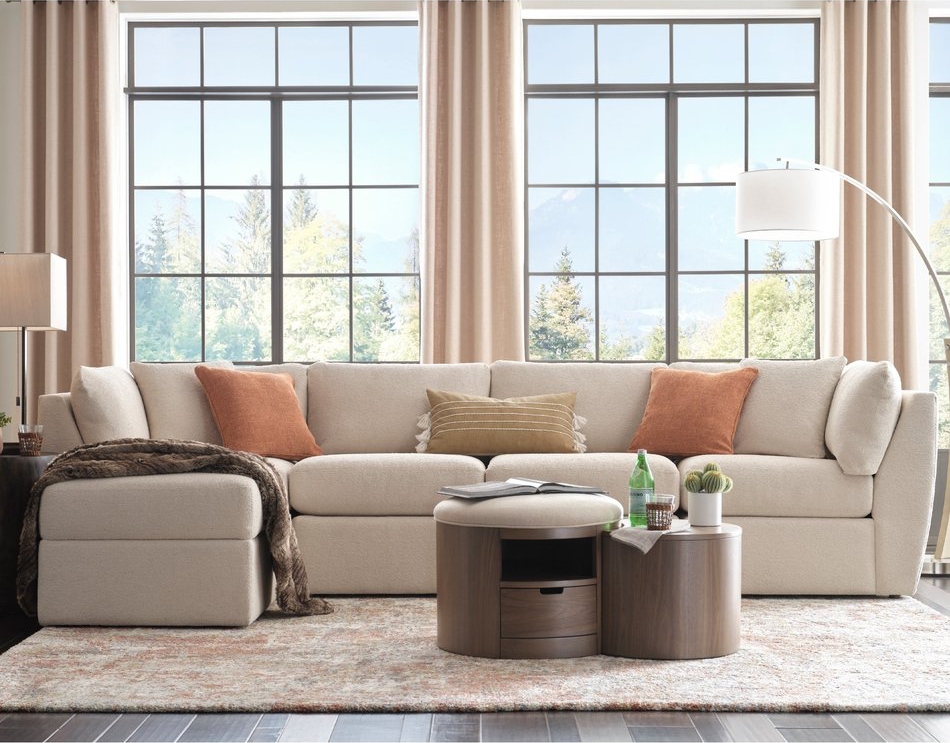
Once the layout feels right, zoom out and think about the overall tone and flow of your home.
Matching (and mixing) colors
- In coastal Rhode Island or Cape Cod–style Massachusetts homes, you might lean into soft neutrals (sand, cream, gray) with blue accents. A neutral sectional with colorful pillows and throws makes it easier to change your look seasonally.
- In urban or more modern spaces, a bold charcoal or deep blue sectional can anchor the room, while lighter rugs and accent chairs keep things from feeling heavy.
- If your living room opens directly into the kitchen or dining room, pull a shared accent color through all three — maybe the navy in your sectional pillows matches the bar stools or artwork in the dining area.
Fabric choices for New England living
- Performance fabrics are a smart choice for families, pets, and coastal humidity. Many modern fabrics resist stains and are easy to clean, something to ask about at Cardi’s Furniture & Mattresses when you’re browsing sectionals and recliners.
- In bright, sunny rooms (like a Seabrook, NH, living room facing the ocean or a South Kingstown space with big windows), consider fade-resistant fabrics, or keep deep colors a bit away from direct sunlight.
7. Make the room flow into adjoining spaces
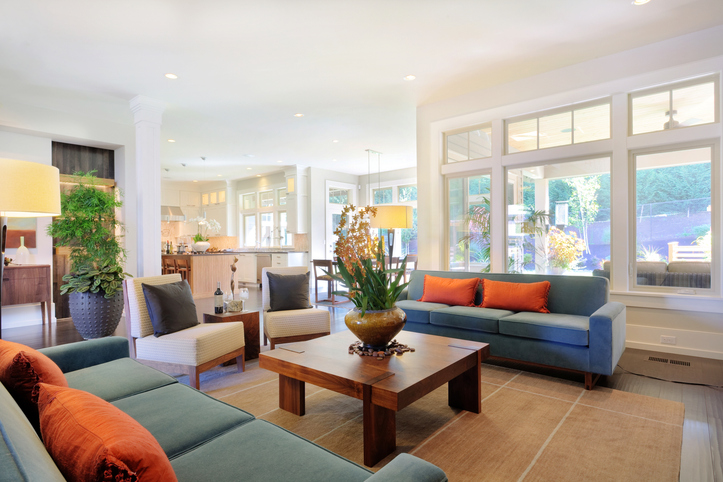
In many New England homes, especially in Rhode Island, Massachusetts, and New Hampshire, living rooms open up into hallways, staircases, or kitchens. Your sectional can help define zones without chopping up the space.
- Use the back of the sectional as a subtle room divider between living and dining areas.
- Avoid placing the sectional so its back is the first thing you see when you walk into the room, unless you soften it with a console table, lamp, or decor.
- Use area rugs to anchor each zone, one under the sectional and coffee table, another under the dining set, in coordinating colors for visual cohesion.
8. Shop local with Cardi’s Furniture & Mattresses
If you live in West Warwick, Middletown, South Kingstown, Swansea, Hyannis, Fall River, Attleboro, or up north in Seabrook, New Hampshire, you’re never far from a Cardi’s Furniture & Mattresses showroom.
Here’s how to get the most from your visit to our furniture store:
- Bring your measurements and photos.
Snap a few pictures of your living room and jot down wall lengths, window locations, and TV size. Sales associates can use this to suggest the right sectional size and configuration. - Test different configurations.
Sit in L-shaped, U-shaped, and chaise sectionals. Try reclining options, test ottomans at different distances, and imagine how they’d feel in your own home. - Ask about fabrics and protection plans.
With New England weather, kids, and pets, choosing performance fabrics and learning about care and cleaning options is worth a few extra questions. - Coordinate the whole room.
Look at recliners, accent chairs, ottomans, sofa tables, TV stands, and other living room furniture while you choose your sectional. Creating a coordinated plan now means your room will feel finished, not pieced together.
For additional help, Cardi’s Furniture & Mattresses offers interior decorating and home design services with dedicated interior designers.
A thoughtfully chosen sectional sofa from Cardi’s Furniture & Mattresses can transform your living room into a comfortable, functional, and stylish hub that works with your recliners, ottomans, and accent furniture, and feels just right for everyday life in Rhode Island, Massachusetts, and New Hampshire.